

Halloween is among the most well-liked and widely observed festivals worldwide, particularly in the US. The festival, well-known for its spooky ambiance, trick-or-treating, pumpkin carving, and costumes, has roots in old customs that have evolved. The history of Halloween has undergone an exciting evolution from its Celtic festival origins to its modern, commercialized form. This essay will examine the history of Halloween, tracing its evolution from prehistoric times to the present.
- The History of Halloween: How It Evolved Over the Centuries
- The Ancient Origins of Halloween
- The Influence of Roman Festivals
- The Christianization of Halloween: All Saints' Day and All Hallows' Eve
- Halloween in the Middle Ages: Mumming and Souling
- The Spread of Halloween to North America
- The Rise of Halloween in the 20th Century
- Halloween in the Modern Era: Global Influence and Pop Culture
- Finally, The Evolution of The History of Halloween
The History of Halloween: How It Evolved Over the Centuries

The Ancient Origins of Halloween
Over 2,000 years ago, Halloween originated from the ancient Celtic celebration of Samhain. November 1 was the New Year celebration for the Celts, who inhabited what is now Ireland, the United Kingdom, and northern France. On October 31, Samhain fell, signaling the end of the harvest season and the start of the gloomy, wintry winter. The Celts believed that at this time, ghosts could travel freely across the earth, since the line separating the living from the dead was at its weakest.
During Samhain, people would light bonfires and dress in costumes, mostly made of animal skins, to ward off evil spirits. The Celts thought that the presence of otherworldly entities made it easier for Druids, or Celtic priests, to foresee the future. They started by offering food to please the roaming spirits. Some essential customs that would eventually influence the present Halloween celebration were dressing up in costumes and giving gifts.
Pumpkin Carving Kit

The Influence of Roman Festivals
As the Roman Empire expanded, it absorbed many of the countries in Britain and other Celtic territories. Local customs began to incorporate elements of Roman culture, and the development of Samhain was influenced by Feralia and Pomona, two Roman festivals. In late October, the Romans observed Feralia, a day honoring the dead, and Pomona, a celebration honoring the goddess of fruit and trees. Apple bobbing is one of the Halloween customs associated with apples, originating from Pomona, the apple goddess.
As Roman and Celtic traditions blended, Samhain began to adopt characteristics from other civilizations and religions. However, the celebration’s central themes, which included the paranormal and the thin barrier separating the worlds of the living and the dead, remained intact.
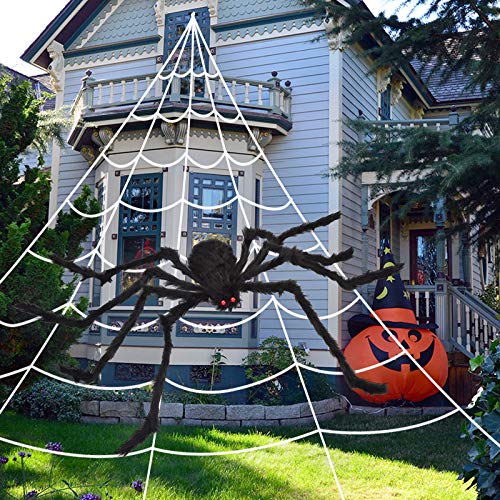
Halloween Spider Web
The Christianization of Halloween: All Saints’ Day and All Hallows’ Eve
As Christianity grew throughout Europe by the seventh Century, the Catholic Church attempted to eradicate or incorporate pagan holidays. All Saints’ Day was first observed in May and instituted by Pope Boniface IV in 609 AD to honor all Christian saints and martyrs. Pope Gregory III relocated the holiday to November 1 a few centuries later, presumably to Christianize the traditions of Samhain and eclipse them.
All Hallows’ Eve, which is the same word as Halloween, was the evening before All Saints’ Day. Despite the Church’s efforts to Christianize the holiday, many traditional pagan customs associated with Samhain, such as bonfires, costumes, and superstitions, persisted and evolved.
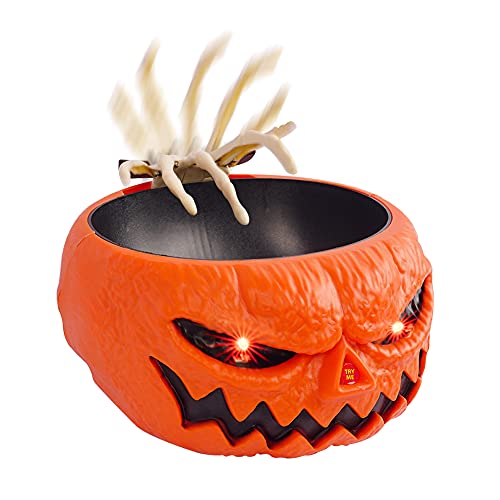
Halloween Candy Bowl
Halloween in the Middle Ages: Mumming and Souling
Halloween remained a period of superstition and the paranormal during the Middle Ages, but new customs started to appear. One such tradition was mumming, a folk theater or performance where participants would dress up and go door to door, amusing people in exchange for money or food. Mumming and souling is one of the earliest variations of the present-day trick-or-treating custom.
Souling, which involved the impoverished, especially children, going from house to house to offer prayers for the deceased in exchange for soul cakes—small round cakes cooked to honor the deceased—was another significant custom that emerged during this time. These traditions became increasingly intertwined with Halloween festivities, lending the event greater emphasis on food, community involvement, and charitable giving.
Face Painting Kit for Kids

The Spread of Halloween to North America
It wasn’t until the 19th Century that Halloween became a national holiday in the US, primarily due to the influx of immigrants from Scotland and Ireland who brought their own Halloween customs with them. Due to the Irish potato famine in the 1840s, many Irish immigrants arrived in America, bringing with them the old rites and practices related to Samhain and All Hallows’ Eve.
Halloween began to change significantly in the US. Costume parties, parades, and festivals, inclusive of both adults and children, were popular in communities. During this time, the custom of trick-or-treating, which sprang from European traditions such as souling and mumming, grew increasingly organized and widespread. The festival became less severe and more entertaining, especially for kids, as it moved away from its dark emphasis on death and the paranormal.
Halloween Bats Decoration

The Rise of Halloween in the 20th Century
By the early 1900s, Halloween had become deeply ingrained in American culture; the modern holiday didn’t take shape until the 1920s and 1930s. During this period, there was an increasing focus on community-oriented events, and Halloween gatherings gained popularity among both children and adults. Although trick-or-treating gained popularity in the 1930s, it wasn’t until the 1950s that it became a mainstay of Halloween festivities in the United States.
In the early 1900s, the holiday also acquired commercial significance. Candy manufacturers, costume firms, and shops started promoting products tailored to Halloween. By the middle of the 20th Century, the day had become a heavily commercialized festival, with sales of sweets, costumes, and decorations playing a crucial role in the festivities. During this time, popular Halloween symbols like witches, black cats, and jack-o’-lanterns also began to appear. These symbols are from media representation, superstition, and folklore.

Halloween in the Modern Era: Global Influence and Pop Culture
Halloween’s popularity grew further in the second half of the 20th Century, and its representation in popular culture, especially in films, TV shows, and books, increased as well. Thanks to classic movies like Disney’s “Hocus Pocus” (1993) and John Carpenter’s “Halloween” (1978), Halloween has become synonymous with spooky fun. It has also become a time for local events, such as haunted homes and horror-themed parties.
Additionally, the holiday has spread beyond its original borders and is gaining popularity in nations beyond the US. Although trick-or-treating, costume parties, and haunted attractions have become commonplace in cities worldwide, Halloween is still primarily celebrated in North America. However, many countries in Europe, Asia, and Latin America have also adopted Halloween customs.
In recent years, the history of Halloween has continued to gain popularity, driven by social media, themed parties, and the growing number of Halloween-related events. While the holiday retains its ancient roots in the supernatural and the harvest, it has become a widely commercial and community-centered event that appeals to people of all ages.

Finally, The Evolution of The History of Halloween
The history of Halloween has evolved, from its Celtic roots to its current prominence as a worldwide holiday, illustrating how customs can adapt. Originally a celebration marking the end of the harvest and honoring the dead, Halloween has evolved into a joyous occasion featuring costumes, candy, and festivities. Despite its commercialization, Halloween remains firmly rooted in themes of superstition, the paranormal, and community.
Halloween is, at its foundation, still a celebration of the weird, the eerie, and the unknown—a time when the lines between the real and the imagined are wonderfully blurred. As the holiday evolves, it reflects the era’s cultural and societal shifts. This article is the history of Halloween for kids, describing how the event originated.